Black and grey and color start out looking like a simple style choice. Ten years on, they read as two different aging stories. At Uptown Arts Studio in Charlotte, artists talk about aging at the consultation because the piece you love fresh is not quite the piece you will wear long term, and each style changes in its own predictable ways.
Both styles spread slightly, both fade in sun, and both benefit from sunscreen. The differences are in what fades first, what stays readable, and when a refresh makes sense.
How each style changes, season by season
Think of care as a calendar rather than a single aftercare week. Piedmont summers are the stress test for any tattoo, with strong sun, humidity, swimming, and sunscreen either applied or forgotten. Winters are gentler on ink but dry skin can make healed work look dull until moisturized.
| Period | Black and grey | Color | Care that matters most |
|---|---|---|---|
| First summer after healing | Contrast is strong; soft shading looks smooth | Colors are at their brightest; light tones look clean | Daily sunscreen on exposed work; keep healing skin out of sun entirely |
| Years 1 to 3 | Fine lines thicken slightly; lightest greys may soften | Yellows, light pinks, and pale blues fade fastest; reds and dark blues hold longer | Sunscreen habit, moisturizer in dry months, photo check once a year |
| Years 3 to 7 | Overall look stays readable; shading may flatten without strong black anchors | Palette narrows as light colors recede; bold traditional color holds best | Consider whether softened areas bother you in photos, not just the mirror |
| Years 7 and beyond | Bold black work remains the most legible from a distance | Many pieces benefit from a color refresh to restore the original balance | Talk to your artist about a refresh versus leaving the settled look |
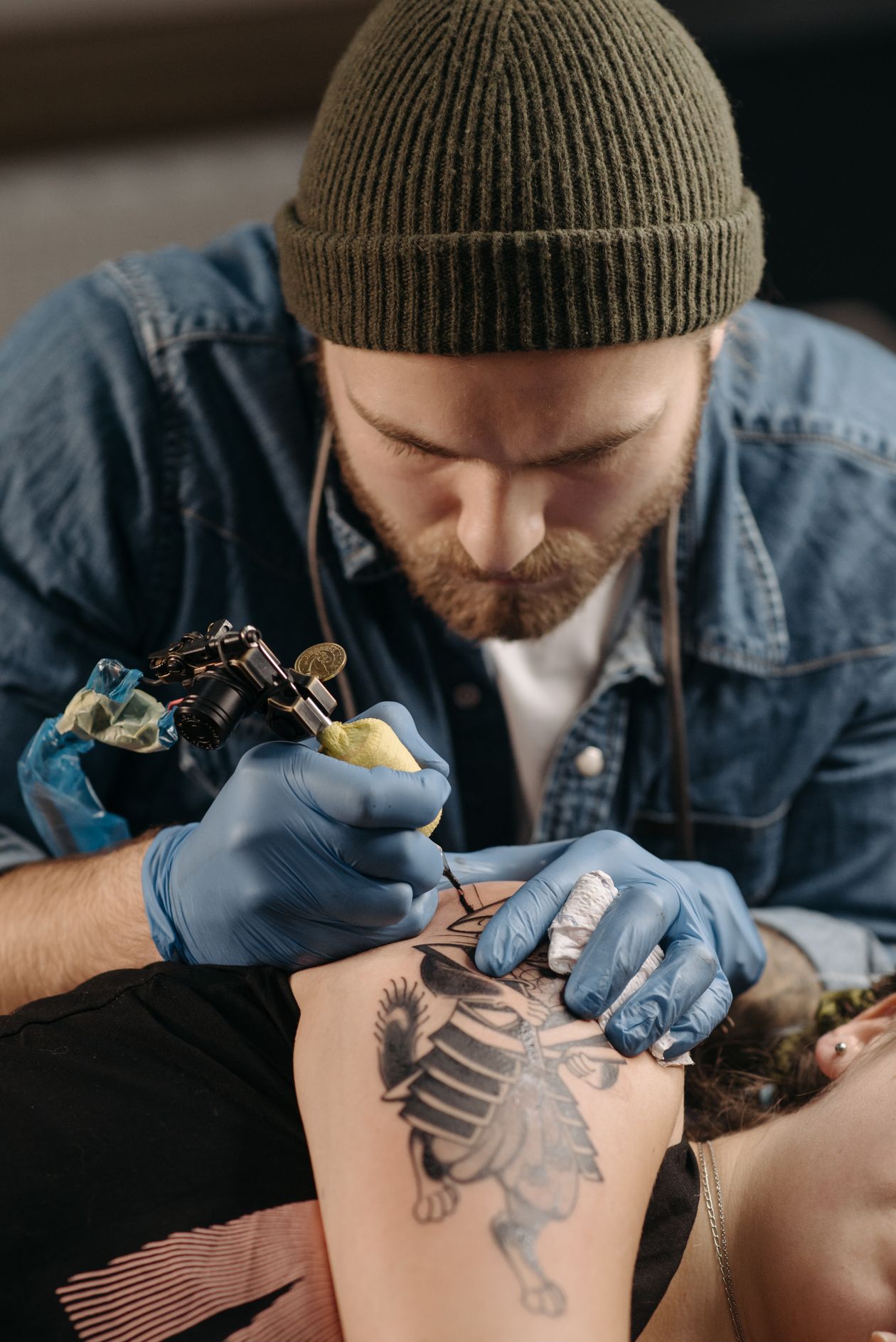
Line spread and readability
All lines spread a little as ink settles in skin over years. In black and grey work, that spread is the main event. Designs built on strong black shapes and clear contrast survive it well, while pieces made only of faint lines and whisper shading can lose definition. In color work, spread matters too, but fading changes the picture first. A color piece rarely becomes unreadable; it becomes a quieter version of itself, with the lightest colors stepping back.
Skin tone is part of this conversation as well. How a color reads fresh and aged varies across skin tones, and a good artist will show healed examples, not just fresh photos, so expectations are set on settled work.
Sun, the shared enemy
Ultraviolet light breaks down ink pigment over time, and exposed placements in Charlotte get a lot of it from April through September. Black ink fades toward a softer dark grey or blue-grey cast. Color loses saturation unevenly, which can shift the balance of a design. Sunscreen after healing, covering up for long days outdoors, and avoiding tanning over tattoos do more for longevity than any aftercare product used in the first month.
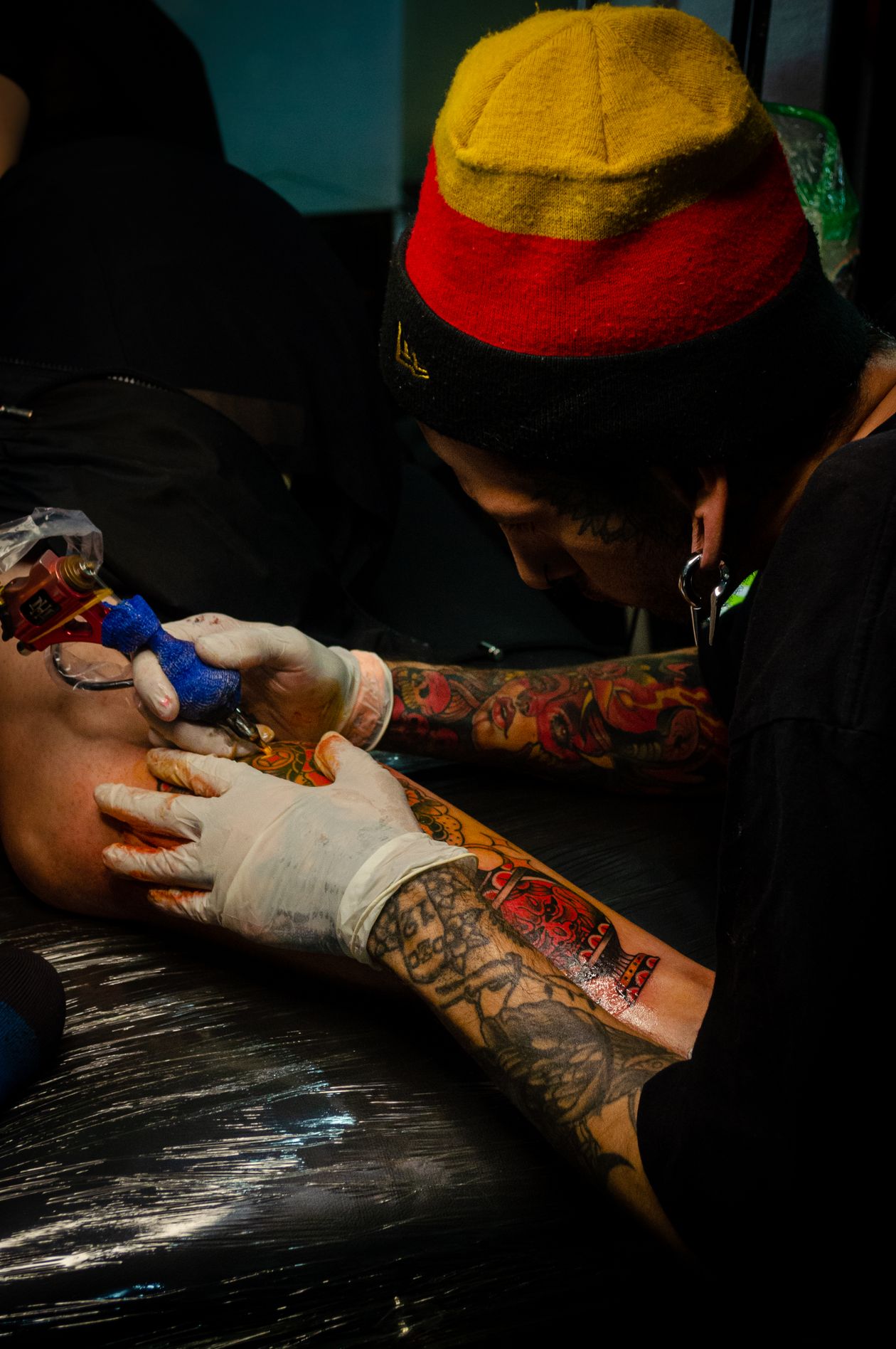
Touch-up and refresh expectations
Black and grey pieces often need less frequent attention. A refresh, if wanted, usually means strengthening blacks and restoring contrast. Color pieces are more likely to benefit from periodic refresh work, particularly where light tones carried important detail. Neither style should need constant maintenance if it was designed with aging in mind: bold shapes, enough spacing between lines, and a palette chosen for staying power rather than only for day-one brightness.
Your own taste matters here. Some people love the settled, lived-in look of an older piece in either style. Others prefer work kept close to fresh. Decide which camp you are in before you choose, and tell your artist, because design choices can lean either way.
Placement ties the whole picture together. A color piece on a shoulder that sits under a shirt most of the year ages very differently from the same design on a forearm that sees sun daily. Black and grey on a back, protected by clothing, can look settled and smooth for a long stretch. When you compare styles, compare them on the placement you actually want, in the sun exposure that spot really gets.
Common questions
Which style lasts longer, black and grey or color?
Bold black work generally stays most legible the longest. Color can last well too, especially saturated traditional palettes, but light colors fade sooner and may need a refresh.
Does sunscreen really make a difference to an old tattoo?
Yes. Sun exposure is the main driver of fading for healed tattoos, and consistent sunscreen on exposed pieces noticeably slows both black softening and color loss.
Can a faded color tattoo be refreshed?
Usually yes. An artist can re-saturate faded areas once the piece is fully settled, and that visit is also a chance to strengthen lines that have spread or softened.
Photos in this guide are representative stock images.
← All guides from Uptown Arts Studio← Back to Uptown Arts Studio