A cover-up is not a magic eraser. It is a new tattoo designed to do a specific job: draw the eye to new shapes and values so the old piece stops reading clearly underneath. At Uptown Arts Studio in Charlotte, cover-up consultations start with an honest look at what you have, because the old tattoo sets the limits for the new one.
Three broad paths cover most cases. You can cover directly with a larger, darker design, you can lighten the old piece with laser sessions first and then cover what remains, or you can rework parts of the old design into something new. The right choice depends on the old tattoo's size, darkness, color, scarring, and what you actually want to wear next.
The options, compared
| Path | Best when | Trade-offs | Design freedom |
|---|---|---|---|
| Direct cover-up | Old piece is small to medium, faded, or mostly light values | New piece must be larger and use darker, busier areas over the old lines | Moderate: the old shape guides the new layout |
| Laser lightening, then cover | Old piece is dark, dense, or large, and you want a lighter new design | Adds time and separate laser appointments; the old piece only needs to lighten, not vanish | High once lightened: more colors and open space become possible |
| Rework or incorporate | Parts of the old piece still work or can become background, shadow, or texture | Limited if the old composition is the problem, not just its execution | Moderate to high, depending on what is kept |
| Leave and add elsewhere | The old piece bothers you less than a much larger dark piece would | Old tattoo remains visible | Full freedom for the new, separate piece |
Why darker and bigger is the usual rule
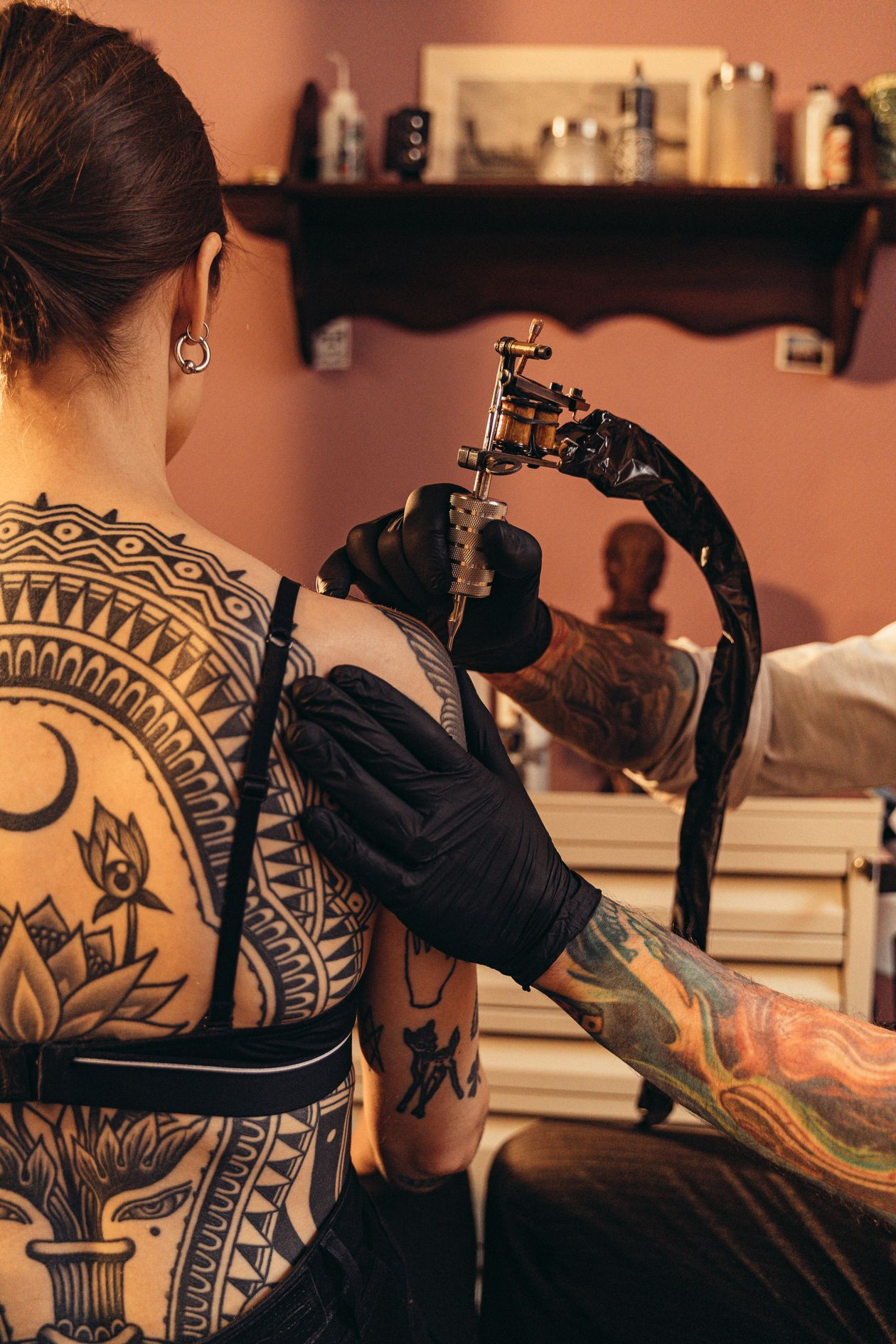
Tattoo ink is translucent. New ink does not paint over old ink the way wall paint covers a wall. Dark values in the new design are what hide old lines, and busy textures like fur, feathers, scales, foliage, and ornamental pattern give the eye somewhere else to go. A pale, airy design placed over a bold black tribal band will show the band through it on day one and more clearly as it settles.
Size works the same way. The new piece needs room around the old edges so the composition does not look forced into the old outline. Expect the artist to sketch a design noticeably larger than the tattoo it covers. If you want the replacement to be the same size or smaller, laser lightening is usually part of the honest answer.
How artists plan the piece
Planning starts with seeing the old tattoo in person, in good light. Photos help for a first inquiry, but skin texture, scarring, and true darkness are hard to judge from a phone picture. The artist maps the darkest areas of the old piece and builds the new design's darkest areas over them. Color choices follow from that map. Deep blues, greens, purples, and black are common cover tools; light yellows and pale pinks cover almost nothing.
Scar tissue and raised lines get special attention. Ink behaves differently in scarred skin, and some areas hold poorly. An experienced artist will flag those spots and may suggest design elements that do not rely on them carrying fine detail.
Questions to bring to the consultation
Bring two or three directions you genuinely like, not one exact image you need copied. Flexibility on subject matter is the biggest lever you control. A client open to a panther, a floral piece, or an ornamental design gives the artist far more to work with than a client fixed on a single light, small idea. Also be ready to discuss timeline. A lightened-then-covered project can stretch across many months, and healed results, not fresh ones, are what the next stage builds on.
Be wary of anyone who promises a complete disappearance with a small, light design in one session. A realistic consultation sometimes delivers news you did not hope for, and that honesty is what a good cover-up is built on.
Common questions
Can any tattoo be covered up?
Most can be covered in some form, but the replacement will usually need to be larger and darker. Very dark or large pieces may need laser lightening first to give the new design a workable base.
Will the old tattoo show through over time?
A well-planned cover should keep the old piece from reading clearly. As both layers age together, regular sunscreen helps the new work stay strong and keep doing its job.
Can I cover a tattoo with skin-tone ink instead?
Skin-tone ink over an old tattoo generally does not work as a cover. It tends to heal unevenly, can shift color, and can complicate later laser or cover work.
Photos in this guide are representative stock images.
← All guides from Uptown Arts Studio← Back to Uptown Arts Studio